The brochures sell sunshine. That’s true in July. January is different, not bad, just different. Here’s what to actually expect.
The real temperatures
From December to February, here’s what you get:
- Daytime: 16–22°C, pleasant in a t-shirt in the sun, light jacket in the shade
- Night: 4–10°C, genuinely cold, you need a warm jacket
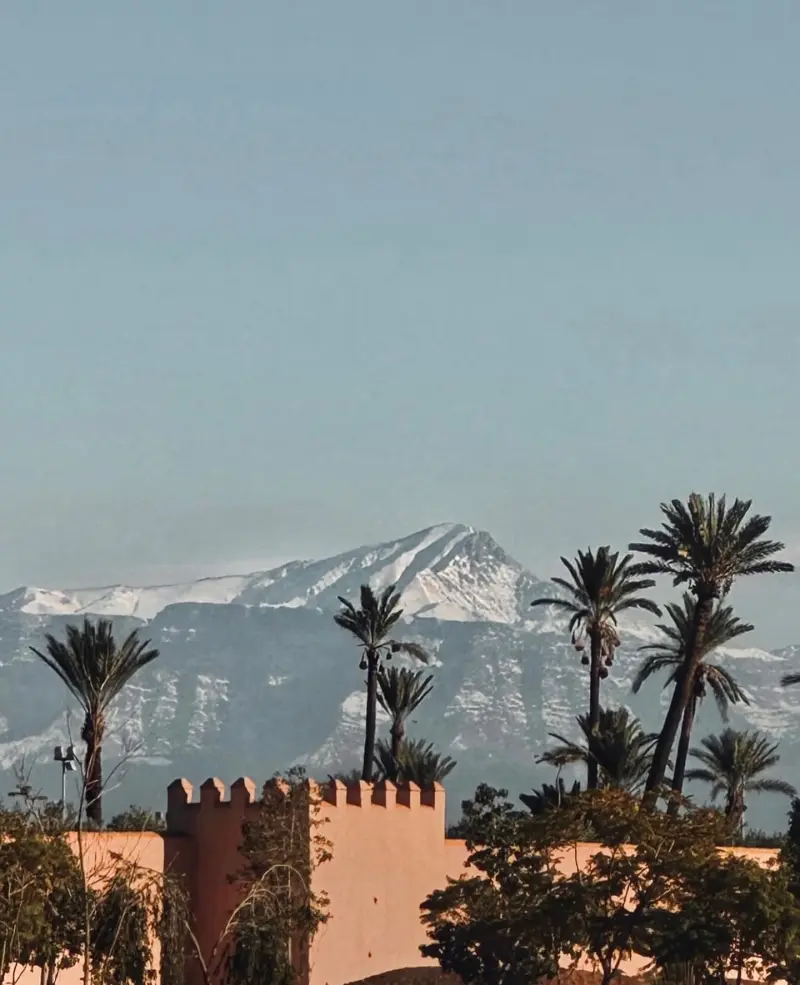
- Atlas: snow-covered, visible from the Ourika road, spectacular. Toubkal white against blue sky.
- Rain: 3–5 days per month in January, rarely all day
It’s not summer. But it’s 20 degrees warmer than Paris or London.
What winter actually changes
The pool: Without heating, the water drops to 14–18°C. With heating, you maintain 26–28°C. This is a real issue: ask before you book.
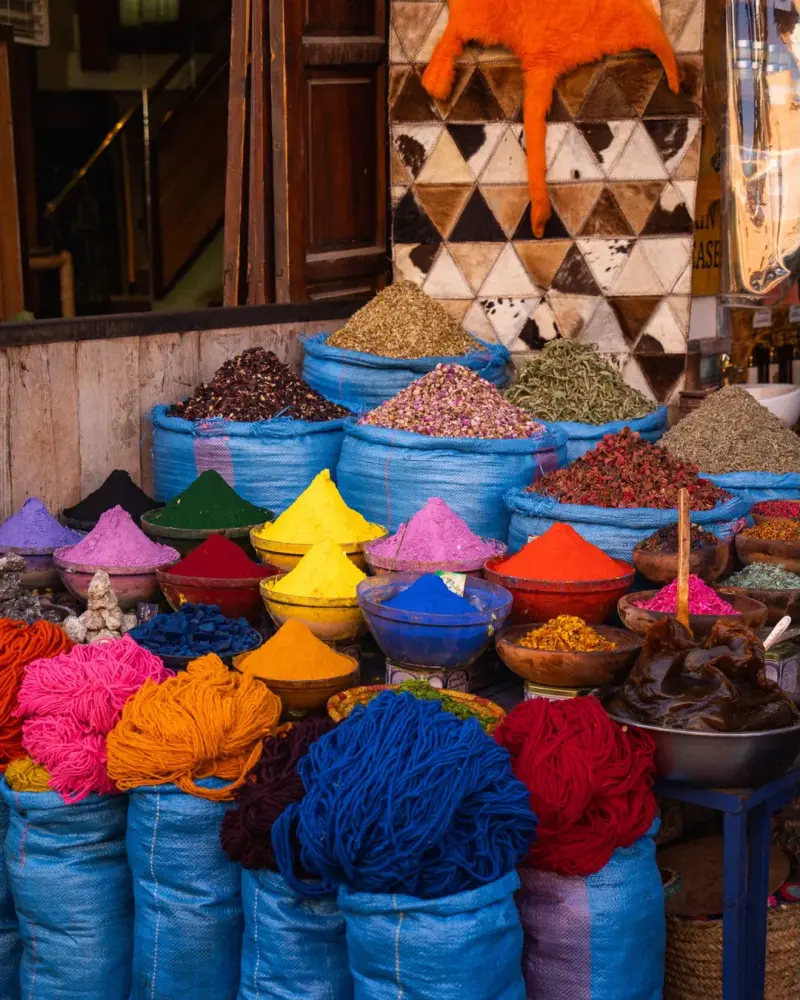
The Medina: Transformed. Fewer tourists, the alleys breathe, December lights are special, you see actual inhabitants going about their lives. It’s the best season for the souks.
Hiking: The Ourika Valley is ideal in winter: perfect walking temperatures, soft light, full river, snow on the Atlas, no tour groups.
Prices: Drop from November to March (except Christmas/New Year). Low season is a genuine bargain.
Christmas/New Year: The week from 20 December to 5 January is often more expensive than summer. Book early.
What to pack in winter
- A warm jacket for evenings
- Closed shoes for hiking
- And above all: the knowledge that you’ll be in afternoon sun in a garden with orange trees bearing fruit while Paris is grey and London is dark at 4 pm
Month by month
December: bright, dry, days around 18-20°C. Except for Christmas/New Year week, this is the best price-to-weather trade-off of the winter.
January: the coldest, wettest month. It is also when the Atlas carries the most snow, spectacular from the Ourika road, and when the Medina is quietest all year.
February: temperatures climb back gently, almond trees start blossoming in the countryside around the villa. Still low season on price, but noticeably milder.
What to do if it rains
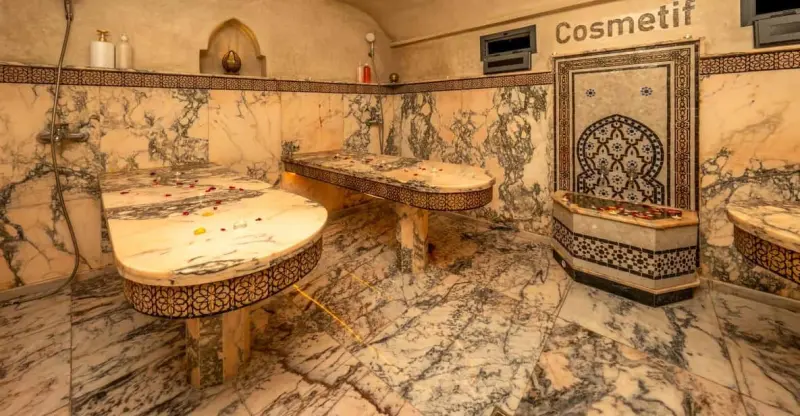
A rainy winter day in Marrakech does not derail the trip. It is the ideal moment for a long hammam session, a cooking class with Fatima, or an afternoon at the Medina's museums (the Yves Saint Laurent Museum, the Photography Museum, Bahia Palace), all visited dry and without the high-season crowds. Rain usually clears within a few hours, rarely lasting all day.
The villa in winter
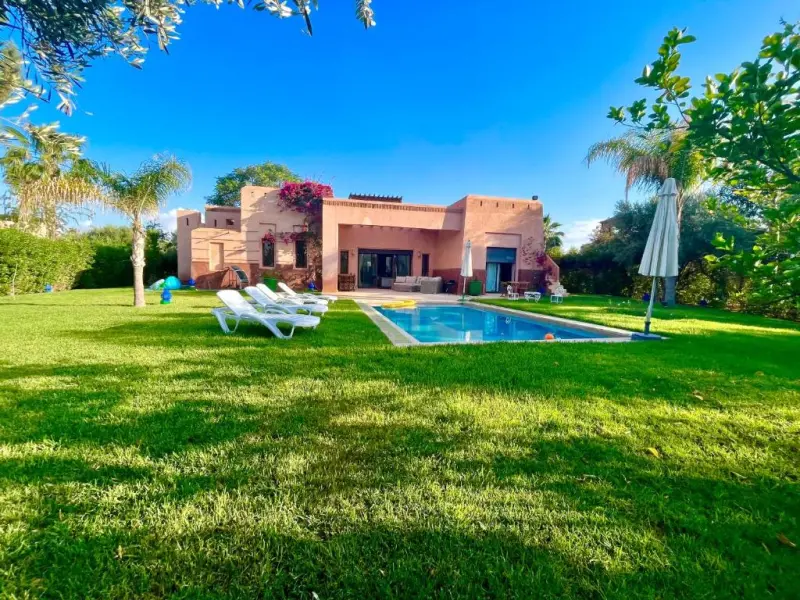
Winter changes the atmosphere at Villa Azur. The living room comes alive in the evening. The heated pool becomes a genuine luxury. The private hammam at 8°C outside is a different experience entirely. And Fatima’s harira for dinner warms you better than any radiator.
Check our low-season rates and consider a long weekend, 3 nights is enough to decompress.